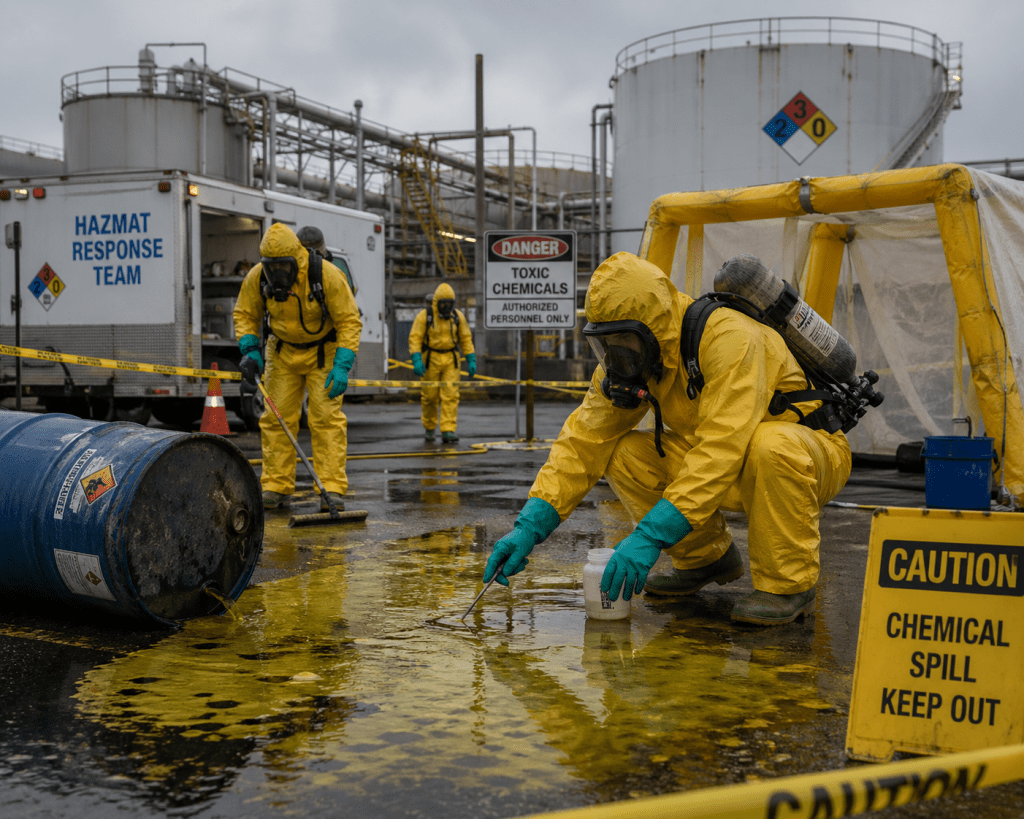
When a company is in possession of, or using, hazardous chemicals onsite, there is always a possibility of a leak, spill, or even a significant release of these chemicals. There is often no advanced warning, and to no fault of any individual. At the moment of chemical release, the company has two options:
- They can evacuate the employees in the immediate release area or the entire facility and wait for outside emergency response teams to arrive and assist in the mitigation of the particular hazardous event. OR
- The company can opt to evacuate their personnel and actively respond to the incident.
It is to the benefit of the company involved to evacuate and respond to the event for a few very significant reasons. Consider the following questions:
- Are the first responders trained to the level required to help with the incident (i.e. the knowledge of the chemicals and how to safely respond)?
- How long will it take the first responders to arrive?
- How much longer will it take if the responders are out on another call?
- How much more significant is the incident going to become while you wait for their arrival?
- Will the responding agency have the equipment needed to respond safely to this event?
- Will the responding agency have valuable knowledge of the facility they are assisting?
The ability to respond safely, quickly and effectively is the ultimate goal. If the company personnel has the training and skill set to mitigate the problem, the incident severity can be greatly reduced.
The industrial refrigeration industry plays a critical role in food preservation, chemical manufacturing, pharmaceuticals, and cold storage logistics. These systems often use hazardous refrigerants such as ammonia or carbon dioxide, which present significant safety and environmental risks. Given the complexity and potential danger of these operations, emergency response training is an essential component of industry best practices. Proper training not only safeguards human life and equipment, but also ensures regulatory compliance and operational continuity.
Industrial refrigeration systems operate under high pressure and often involve large quantities of refrigerants that can be toxic, flammable, or asphyxiating. For example, ammonia, commonly used due to its efficiency and low environmental impact, poses serious risks if released. An accidental leak can result in chemical burns, respiratory injuries, or explosions.
Emergency response training equips workers with the knowledge to identify warning signs, respond appropriately, and contain incidents before they escalate. Trained employees understand evacuation procedures, personal protective equipment (PPE) requirements, and first-response protocols. This proactive approach reduces the likelihood of fatal accidents and mitigates the severity of incidents when they occur.
In many jurisdictions, emergency preparedness is not optional. Agencies such as the Occupational Safety and Health Administration (OSHA), the Environmental Protection Agency (EPA), and similar global bodies require employers in the refrigeration sector to implement Process Safety Management (PSM) and Risk Management Plans (RMP).
Emergency response training is integral to these programs, ensuring workers are capable of implementing the facility’s emergency action/response plan. Regular drills and refresher courses demonstrate compliance and provide documentation for audits, potentially protecting companies from citations, fines, and liability claims.
A well-trained workforce minimizes downtime following a hazard. Workers who can quickly isolate damaged equipment, stop leaks, and coordinate with emergency services help reduce property damage and production losses. In an industry where the value of stored goods can reach millions of dollars, response speed and decision-making under pressure are crucial.
Moreover, trained employees improve communication with external responders—firefighters, HAZMAT teams, and medical staff—ensuring hazards are clearly conveyed and controlled efficiently.
Many industrial refrigerants, including ammonia, can cause environmental harm if released. Proper emergency response procedures help prevent large-scale releases. Training workers to contain and neutralize spills demonstrates corporate commitment to sustainability and social responsibility, which are increasingly valued by regulators and the public.
Emergency response training can also foster a safety-first culture. When employees feel confident in their ability to respond to crises, overall morale and attentiveness improve. The employee can feel a sense of value toward the company they represent. This creates ripple effects across operations, encouraging communication, hazard reporting, and accountability. A company culture rooted in preparedness, not only decreases accident rates, but also enhances its reputation among clients, insurers, and regulatory agencies.
In conclusion, emergency response training is a critical practice in the industrial refrigeration industry. It protects human life, preserves equipment, maintains environmental integrity, and ensures compliance with legal and ethical standards. The hazards associated with refrigerant systems demand more than technical knowledge—they require readiness under pressure. By investing in comprehensive and recurring emergency response training, companies strengthen both their operational resilience and their moral responsibility to employees and the wider community.
To find more information on the safety and compliance services Industrial Consultants offers, or to schedule training, please visit our website at www.ammonia.com or call our office today: 918-274-8639.
 Industrial Consultants
Leave a comment