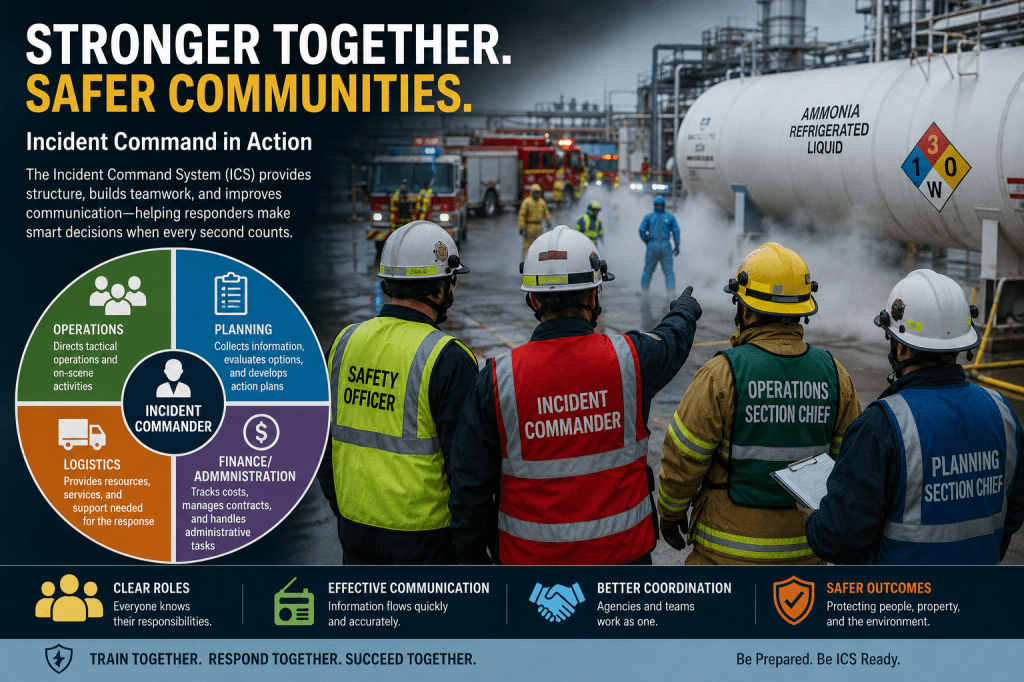
The Incident Command System (ICS) is a structured framework used to manage and coordinate emergency response activities. Originally developed in the 1970s to improve wildfire response efforts, ICS has grown into a widely accepted system for managing a variety of incidents, including natural disasters, active shooter events, hazardous material releases, and acts of terrorism.
Incident Command Structure
At the center of the ICS organization is the Incident Commander, who has overall responsibility for managing the incident and directing response operations. Supporting the Incident Commander are several functional sections, including Operations, Planning, Logistics, and Finance/Administration. Each section has clearly defined responsibilities that contribute to an organized and effective response. This structure promotes accountability, reduces confusion, and enhances communication among all responding personnel.
Advantages of ICS
One of the primary strengths of ICS is its ability to improve coordination among multiple agencies and organizations. By establishing a common organizational structure, defined roles, and standardized procedures, responders can work together more efficiently. ICS also enhances situational awareness, enabling leaders to make informed decisions and adjust strategies as conditions change.
Real-World Applications
The Incident Command System has proven effective in managing a wide range of emergencies, including wildfires, hurricanes, public health emergencies, and mass casualty incidents. Its flexibility and scalability make it a valuable tool for emergency managers, first responders, businesses, and community organizations.
In hazardous materials incidents, ICS provides a critical framework for coordinating response efforts among facility personnel, fire departments, hazardous materials teams, law enforcement, emergency medical services, and regulatory agencies. Whether responding to an ammonia release, chemical spill, toxic gas leak, or transportation accident involving hazardous substances, ICS helps establish clear objectives, assign responsibilities, and maintain effective communication among all responding organizations. This coordinated approach improves responder safety, supports timely decision-making, minimizes environmental impacts, and helps protect employees, the public, and surrounding communities.
Conclusion
Understanding and implementing the Incident Command System is critical to improving emergency preparedness and response efforts. Ongoing training and collaboration with external partners, such as Local Emergency Planning Committees (LEPCs) and local fire departments, help strengthen response capabilities and improve outcomes. The more organizations train and work together before an emergency occurs, the better prepared they will be to protect both businesses and the communities they serve.
 Industrial Consultants
Leave a comment